As of today, peak season now, through ~July 15. Earth Exhibit tracks the live conditions and flags it the moment it is on.
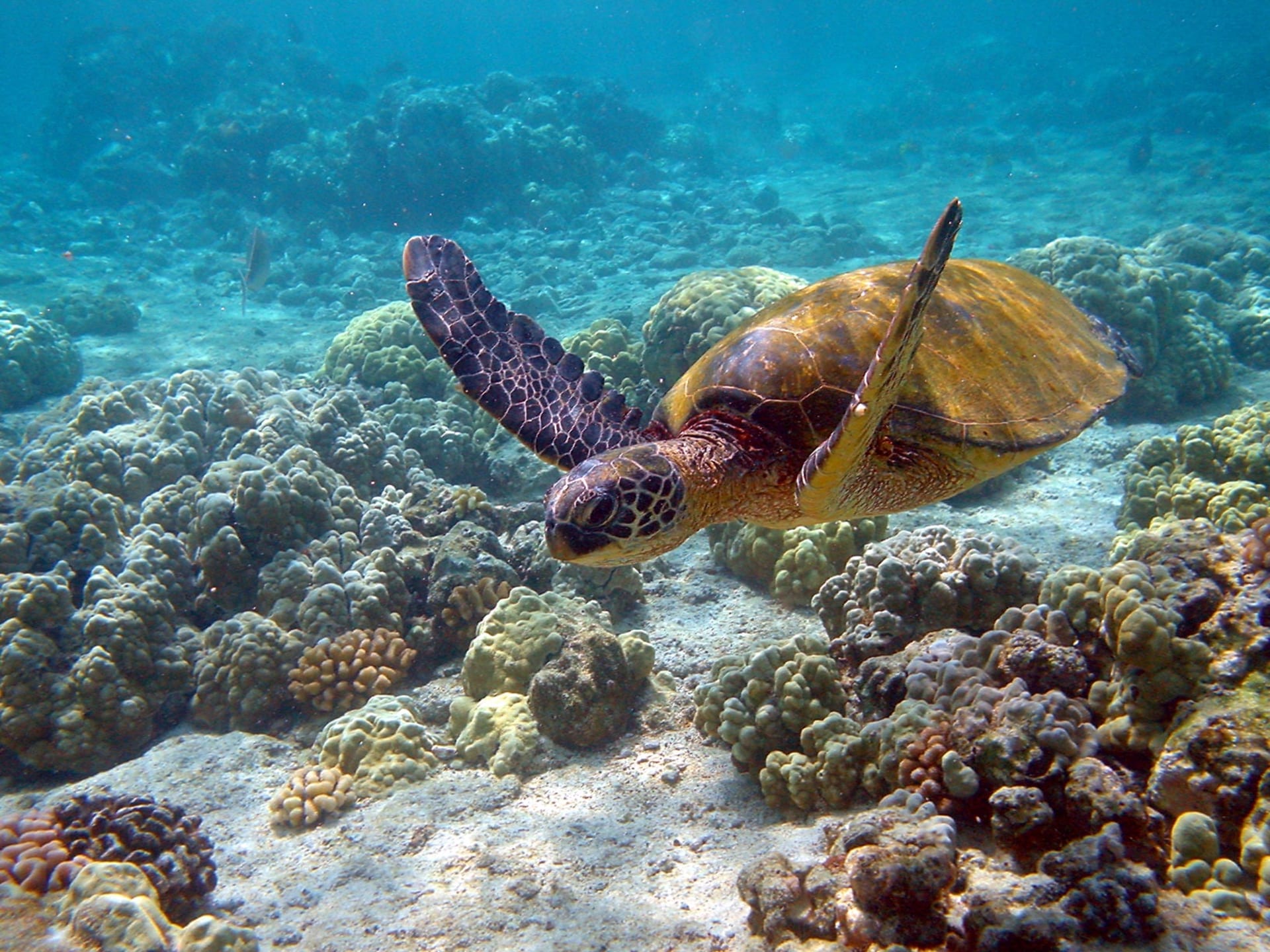
The first thing you hear is silence. You stand in the dark on Inakahama Beach, your eyes adjusting to the moonless night, and you wait. Then you see it: a meter-long shadow emerging from the surf, pulling herself forward with powerful front flippers. Yakushima is the only place in the North Pacific where loggerheads lay their eggs , and between 30 and 40 percent of all loggerhead sea turtles coming ashore in Japan do so on Nagata Beach . Turtle tours commence in mid-May 2026 and operate between mid-May until mid-July , the narrow window when these ancient mariners haul themselves onto the same beaches where they hatched three decades ago.
The Science Behind Loggerhead Sea Turtle Nesting
The loggerhead sea turtle (Caretta caretta) is a marine reptile belonging to the family Cheloniidae . Adult loggerheads measure around 90 centimeters in carapace length and weigh approximately 135 kilograms , though some specimens grow larger. They are named for their massive heads and strong jaws which they use to eat hard-shelled animals like whelk and conch .
Female loggerheads reach maturity at about 35 years of age and return to nest on the very same beach where they were hatched, called the natal beach . This precise homing behavior, called natal philopatry, drives females across thousands of miles of open ocean. Young loggerheads hatch on Yakushima and then migrate on the Kuroshio Current to the coast of Baja California in Mexico, eventually returning to Yakushima to lay eggs .
Loggerheads are solitary, night-time nesters, specifically nesting between the hours of 10 PM and 3 AM . They come ashore at night to evade predators, dig a hole in the sand, lay their eggs, and then take 30 minutes or more to cover the holes with sand . You will see the turtle lay 100 to 120 eggs and then fastidiously cover the eggs so that there are no traces of her nest . The entire process from emergence to return to the ocean takes about 70 to 90 minutes. The eggs are warmed by geothermal heat in the sand and hatch in about 45 to 75 days .
The turtles use celestial cues and the magnetic field to navigate, though the exact mechanisms remain partially understood. When loggerhead hatchlings emerge from the shell, they are attracted to the blue and green wavelengths of light naturally reflected off the ocean through celestial light, using this natural light cue to navigate from the nest towards the ocean . This is why artificial light is so dangerous.
When and Where to See Yakushima Sea Turtle Nesting
The primary nesting beaches are concentrated on Yakushima's northwest coast. Turtles nest at five main areas: Nagata's Maehama and Inakahama Beaches, Isso Beach, Kurio Beach, and Nakamahama Beach . The beaches at Nagata are the most popular with visitors for their high likelihood of observing nesting activity .
Inakahama Beach is the crown jewel. Nagata Inakahama Beach is a kilometer-long strip of sand known as a nesting spot for turtles . From May to July over 500 turtles come ashore at Inakahama Beach to lay their eggs . The chances of seeing a sea turtle are highest from mid-May to June .
Access is tightly controlled. You cannot attempt to go on the beach at night without a trained guide as you may disturb these sensitive creatures and face a heavy fine, and you cannot enter the beach at night between May 1 and August 31 except on official tours . Visitors must join the Sea Turtle Nesting Observation Tour offered by the Nagata Sea Turtle Liaison Council, and advance reservations are required . Turtle tour bookings will be accepted from March 15th for the 2026 season.
Tours begin around 8:30 PM with an orientation session at the Yakushima Umigame-kan (Sea Turtle Museum) near Nagata. Guides explain turtle biology and the strict observation rules. Guides from the NPO patrol the beach and once a turtle has begun to lay her eggs the NPO guides call the tour participants onto the beach . The latest you will leave the turtle beach is 10:30 PM .
Not every night guarantees a sighting. There are no guarantees that you will see sea turtles nesting . Weather, tide, and simple chance all factor in. Some nights see a dozen turtles. Other nights, none.
Getting to Yakushima requires either a ferry from Kagoshima (2 to 4 hours depending on ferry type) or a flight to Yakushima Airport from Kagoshima, Osaka, or Fukuoka. From the main port town of Miyanoura, Nagata is about a 30-minute drive northwest. A rental car is essential, as the Nagata area is remote and public transportation is limited.
Your Witnessing Guide
The observation rules are non-negotiable, and they exist to protect one of the world's most important loggerhead rookeries.
Turn off any artificial lights, do not walk on the beach indiscriminately, do not make any noise, do not touch the sea turtles, and taking videos and pictures are prohibited . Turtles are sensitive to light and so there is a strict ban on any lights, mobile phone use, photography or filming during the tour . This is not a suggestion. One flash can cause a turtle to abandon her nest.
The beach may get chilly at night. Dress accordingly . Bring:
- Dark clothing (no white or reflective materials)
- Closed-toe shoes with good traction (sand can be uneven and damp)
- Light layers (nights can drop to 15-18 degrees Celsius in May)
- Patience
- A red-filtered headlamp (only for personal safety at the orientation building, never on the beach)
There is a limit on the number of people who can attend this tour each night (50 people) . Book as early as possible, especially for June dates. Tour fees range from 6,000 to 8,000 yen per person depending on the operator.
Photography is impossible here, and that is the point. You will not get images. You will get the memory of watching a 130-kilogram turtle dig a flask-shaped chamber 60 centimeters deep with her rear flippers, deposit over 100 white, leathery eggs, and then spend 20 minutes burying them with such precision that you cannot tell where the nest was. You will get the sound of the surf and her labored breathing. You will get the moment she turns and drags herself back to the water, leaving a track like a tractor tire across the sand.
The hatching season on Yakushima is from early July to late September . Some operators offer hatchling observation programs in August, where visitors watch the tiny turtles emerge from the sand and scramble toward the waves. These tours follow equally strict rules and are timed around high tide when hatchlings naturally emerge.
Why It Matters
Japan is one of the world's leading loggerhead turtle spawning grounds after the southeast coast of the United States and Oman, and the only such spawning ground in the North Pacific . In November 2005, Nagata Beach was registered under the Ramsar Convention on Wetlands, which recognized Nagata as having the most loggerhead turtle nesting sites in the North Pacific and as an important area for the turtles' survival .
Loggerhead sea turtles face the same risk of extinction as blue whales and chimpanzees, and appear as endangered species in Japan's Ministry of the Environment Red List and the Fisheries Agency databook . They are registered on the IUCN Red List of Threatened Species .
The threats are human-made and relentless. The future of sea turtles is under numerous threats, including local human disturbances, light pollution, and global climate change and marine plastic pollution . The greatest threat is loss of nesting habitat due to coastal development, predation of nests, and human disturbances that cause disorientations during the emergence of hatchlings . Even slight interference with light or human presence can cause false landings in which turtles give up spawning and turn back into the sea .
The observation program at Nagata represents a compromise between conservation and tourism. Yakushima Umigame-Kan, a nonprofit center dedicated to the ecological study and protection of sea turtles on Yakushima, plays a key role in monitoring and researching sea turtle ecology, cleaning up beaches, patrolling nesting, and training volunteers . By limiting nightly visitors to 50 and enforcing a zero-light policy, the program allows people to witness the nesting while minimizing disruption.
The turtles you see on Inakahama Beach in May 2026 were born there in the early 1990s. They spent three decades crossing the Pacific. They survived fishing nets, plastic ingestion, boat strikes, and predators. They navigated thousands of miles using magnetic fields and ocean currents we barely understand. And now they have come home to lay eggs in the exact stretch of sand where their own lives began. That cycle has continued for millions of years. Whether it continues for millions more depends on whether we can keep the beaches dark, the water clean, and the disturbances minimal.
This is the short version
This page shows a taste. The app has the full list of where to see this, the exact timing, and live conditions for 1,000+ natural phenomena worldwide, so you know the moment one is genuinely worth the trip.