As of today, out of season, returns ~February. Earth Exhibit tracks the live conditions and flags it the moment it is on.
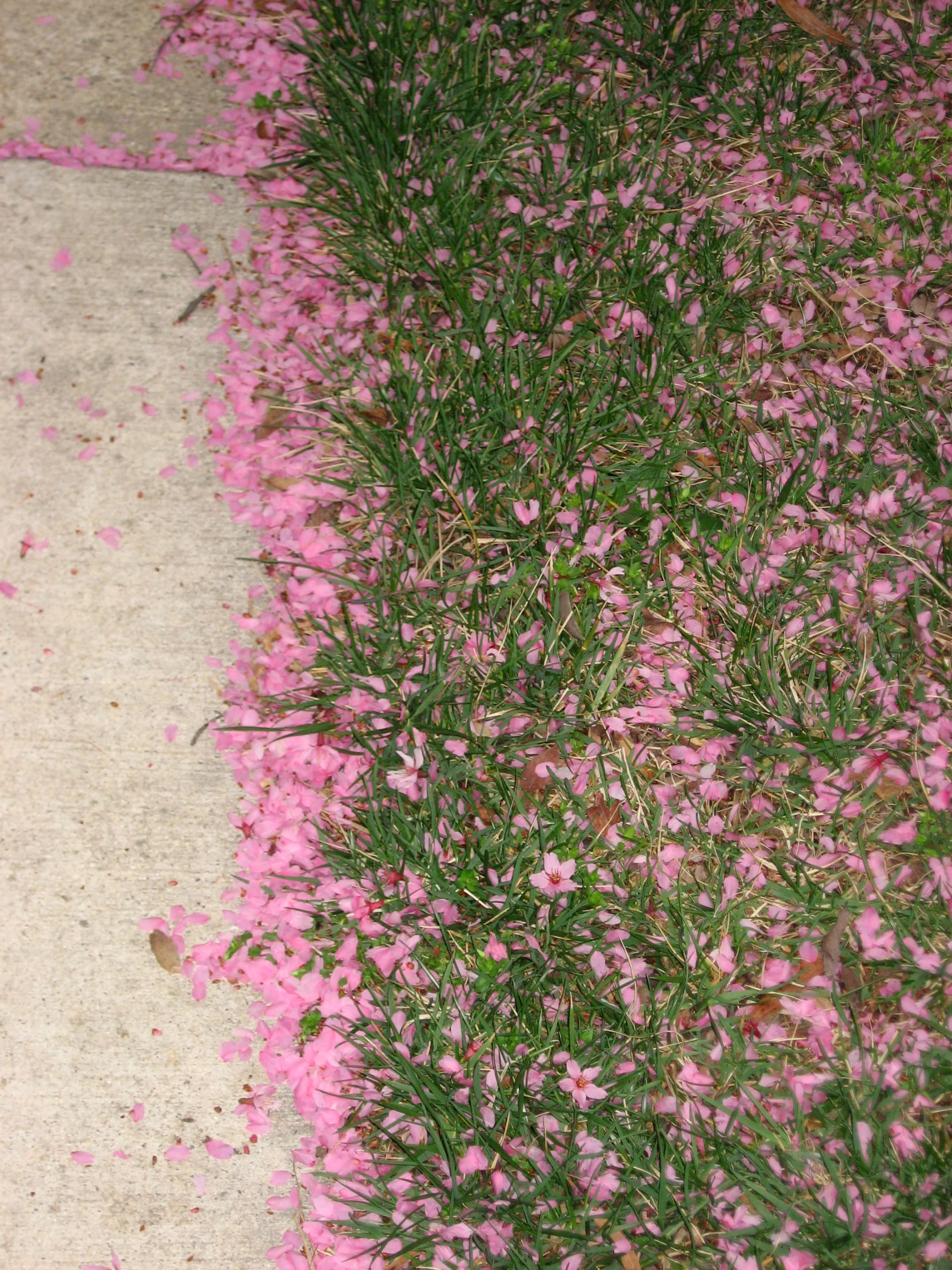
The petals come in sideways when the wind kicks up. One minute you are walking through Ueno Park under full-bloom canopies, and the next, you are inside what looks like a pink snowstorm. The Japanese have a word for this: sakura fubuki, literally "cherry blossom blizzard." For 2026, Tokyo's cherry blossoms are expected to start on March 21 and peak on March 28 , with the petal fall phase beginning just days after. That narrow window, maybe three to five days when conditions align, is when sakura fubuki happens.
This is not the moment tourists plan for. Everyone chases full bloom, that Instagram-perfect umbrella of pink overhead. But there's only a very short time frame when you can witness good petal blizzards, sometimes only one day depending on the weather . You need wind. You need trees already past their peak. And you need to be there when it happens, because by the next morning, the branches are bare and the season is over.
The Science Behind Sakura Fubuki
Cherry trees (primarily Prunus x yedoensis, the Somei Yoshino variety that dominates urban Japan) hold their petals for roughly seven to ten days after reaching mankai, or full bloom. The petals attach via a thin abscission layer at the base of each flower. As the tree ages past peak bloom, this layer weakens. Heavy rain and strong winds can knock petals off , but timing matters. Before trees reach peak bloom, flowers are less fragile, but once in full bloom and beyond, they become increasingly vulnerable .
Temperature, rain, and wind have a strong effect on the bloom process, accelerating, delaying, or shortening it considerably . A warm spell after peak bloom softens the abscission layer faster. Then, when wind arrives (spring fronts are common in late March and early April across Honshu), millions of petals release simultaneously. The effect is most dramatic in places with dense tree concentrations: long avenues, moats, riverbanks. The petals do not just fall. They swirl, tumble, and carpet entire sidewalks in minutes.
Cool, calm weather can extend the length of the bloom, while a rainy, windy day can end the blossoms . That is why sakura fubuki is ephemeral even within an already brief season. Miss the weather window by 24 hours and you are looking at either intact canopies or bare branches.
When and Where to See Sakura Fubuki
As of February 26, 2026, the Japan Meteorological Corporation released its sixth cherry blossom forecast, predicting first flowering and full bloom dates for the somei-yoshino variety at around 1,000 destinations . Tokyo is expected to bloom around March 20, with areas west of greater Tokyo blooming in late March . Full bloom typically follows five to seven days after first flowering, placing Tokyo's mankai around March 26 to 28, 2026.
Sakura fubuki happens in the three to five days after peak bloom, contingent on wind. Monitor daily weather forecasts during the last week of March. Look for spring fronts pushing through Honshu, bringing gusts of 20 to 35 mph. When that aligns with trees already three or four days past mankai, conditions are ideal.
Top Locations for Sakura Fubuki:
Chidorigafuchi Moat (Imperial Palace Moat), Tokyo: The long, narrow moat channels wind, creating dramatic petal currents. When blizzards begin, petals accumulate on the water's surface, forming pink rafts that drift in synchronized patterns. The tree-lined paths amplify the tunnel effect.
Ueno Park, Tokyo: Over 1,000 cherry trees create a canopy dense enough that when petals fall en masse, the ground disappears under a pink carpet within an hour. The wide promenades let you see the scale of the phenomenon.
Meguro River, Tokyo: The 4-kilometer canal transforms into a petal-filled stream. Petals collect along the banks and swirl in eddies. Evening light through falling petals here is extraordinary.
Maruyama Park, Kyoto: Home to the famous weeping cherry (shidarezakura), which sheds petals in cascading waves. The park's layout, surrounded by low hills, traps wind in a way that makes petals rise and fall unpredictably.
Hirosaki Park, Aomori: Hirosaki Park surrounds a historic castle with more than 2,500 cherry trees; moats fill with floating petals, creating mirror-like reflections, and it blooms later than Tokyo and Kyoto, typically mid to late April . The northern latitude means cooler spring temperatures, which can prolong petal retention, but once wind arrives, the blizzards are intense.
Access all these sites via Tokyo Metro, JR lines, or local buses. Chidorigafuchi is a 10-minute walk from Kudanshita Station. Ueno Park sits directly above Ueno Station. Meguro River runs parallel to the Meguro and Naka-Meguro stations on the Hibiya and Toyoko lines.
Your Witnessing Guide
Sakura fubuki is unpredictable. You cannot plan this trip months in advance and expect perfect conditions. If you are in Japan for full bloom and weather forecasts show wind arriving two to three days later, adjust your plans. Stay flexible.
What to Bring:
- Wide-angle and macro lenses. Wide-angle captures the scale of petal clouds filling a street or moat. Macro isolates individual petals mid-flight or resting on surfaces. A 24-70mm zoom covers both.
- Fast shutter speeds. Petals move. Start at 1/500s to freeze motion, or drop to 1/125s for intentional blur that conveys movement. Shoot in Shutter Priority mode (Tv or S) to control motion rendering.
- Overcast light is your friend. Bright sun creates harsh shadows and blows out pink petals to white. Overcast skies diffuse light, saturating petal color. If sun appears, shoot early morning or late afternoon when angle is low.
- Rain gear. Sakura fubuki often coincides with light rain or follows a storm.
It can be windy and start raining, and storms can come up suddenly . A waterproof jacket and lens cloth keep you shooting. Wet petals on pavement intensify color.
- Comfortable shoes with grip.
Petals on the ground can be slippery, sometimes accumulating in large amounts, but that can also be visually striking in its own way . Wet petals on tile or stone are slick. Rubber-soled shoes prevent falls.
Photography Settings:
- ISO 400-800 under clouds; ISO 100-200 in sun.
- Aperture f/4 to f/8 for street scenes with depth; f/2.8 or wider for isolated subjects.
- Continuous autofocus (AI Servo/AF-C) tracks falling petals.
- Burst mode captures multiple frames per second. Petals do not pause.
Etiquette:
Do not shake trees to create artificial blizzards. Respect hanami picnic areas; people reserve spots with tarps. Keep pathways clear during peak foot traffic. If photographing at night near Chidorigafuchi or other illuminated sites, avoid blocking other visitors and use minimal additional lighting.
Why Sakura Fubuki Matters
The Japanese concept of mono no aware, often translated as "the pathos of things," hinges on impermanence. Cherry blossoms embody this. They bloom for days, not weeks. Petals fall while still beautiful, not after withering. Sakura fubuki is the crescendo of that impermanence, the moment when beauty scatters and vanishes in real time.
Culturally, cherry blossoms appear across centuries of Japanese poetry, woodblock prints, and seasonal rituals. The Heian period (794 to 1185) formalized hanami, flower-viewing parties beneath blossoms. Poets wrote of hana no chiru, the scattering of flowers, as a metaphor for life's fleeting nature. Sakura fubuki amplifies that theme. You stand inside the scattering. Petals land on your hair, your shoulders, the pages of your notebook.
Ecologically, petal fall signals the transition to leaf growth. Once petals drop, cherry trees redirect energy to photosynthesis. The fallen petals decompose rapidly, returning nitrogen to soil. In urban parks, groundskeepers often leave petal carpets for a day or two before clearing them, both for aesthetic reasons and to let organic material integrate naturally.
Climate trends are shifting bloom dates earlier. Temperatures are expected to be around average in January and February 2026 but higher than usual in March and April, meaning blooming will take place earlier than in a typical year . Over the past three decades, Tokyo's average bloom date has moved from early April to late March. Warmer springs shorten the window between first bloom and petal fall, compressing the sakura fubuki phase. That makes timing even more critical.
This is the short version
This page shows a taste. The app has the full list of where to see this, the exact timing, and live conditions for 1,000+ natural phenomena worldwide, so you know the moment one is genuinely worth the trip.