As of Jun 17, 2026, 4:21 PM, in season, building toward peak (~June 25). Earth Exhibit tracks the live conditions and flags it the moment it is on.
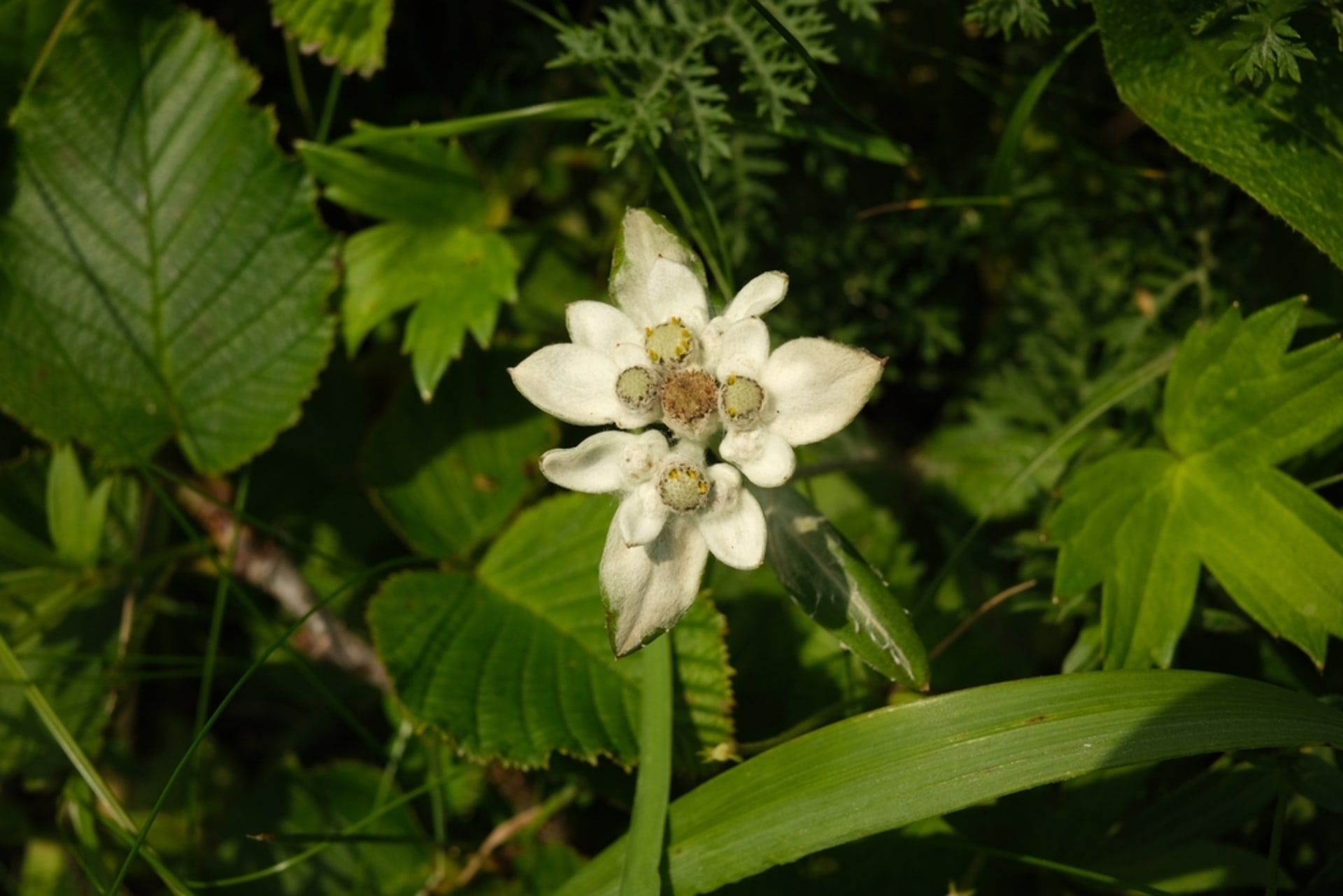
The fog lifts at dawn to reveal a hillside covered in white stars. Leontopodium discolor, Rebun's endemic edelweiss, blooms at 10 meters above sea level. On most Japanese mountains, you'd need to climb 2,000 meters to find these flowers. Here, the cold northern climate brings alpine plants down to the coast. The bloom window opens in three months, and it closes fast.
The Science Behind Rebun's Sea-Level Alps
Rebun Island sits 50 kilometers off Hokkaido's northwestern tip in the Sea of Japan.
The island's cold climate allows alpine plants that normally grow at 2,000 meters elevation on Honshu to flourish at ground level. This thermal inversion creates what locals call the "Floating Island of Flowers."
Approximately 300 varieties of alpine vegetation bloom on Rebun. Several exist nowhere else. Cypripedium macranthos var. rebunense is an endangered terrestrial orchid endemic to this island.
Known as the "queen of orchids," the Rebun atsumoriso blooms from late May to mid-June. Its pouched flower resembles the horo, an armored cloak worn by samurai Taira no Atsumori.
The cold works as a filter. The Tsushima warm current and Liman cold current merge here, filling the sea with plankton. Fog rolls in regularly. Summer temperatures stay cool. Competition from lowland species never arrives, so alpine plants occupy every elevation zone.
Rebun usuyukiso, the island's endemic edelweiss, blooms from mid-June to mid-August.
The official flower of Rebun is characterized by pale white leaves wrapped in soft, downy hair, looking as if dusted with fresh snow.
When and Where to See Rebun's Alpine Blooms
Peak Season: June through July. The Rebun atsumoriso orchid blooms from late May to mid-June. Most alpine species hit peak color in late June through early July. By August, the show is winding down.
The 8-Hour Trail traverses the island north to south, starting at Cape Sukoton. The trail runs from one end of the island to the other. Expect 6 to 7 hours of actual hiking time for fit walkers. The path crosses coastal cliffs, forest sections, and open alpine meadows. The Momoiwa section gets very muddy after rain.
Leontopodium Discolor Colonies (45.31302, 141.033139) hold dense stands of the endemic edelweiss. Access is regulated to protect the plants. Stay on marked paths.
Rebun Atsumoriso Colony (45.424872, 140.999566) protects the orchid habitat. Reproductive orchids survive in herbaceous meadows with high plant species richness in coastal regions. Viewing from designated areas only.
Kafukamura (45.355532, 141.033377) and the southern Momoiwa Observatory Course pack the most flower diversity into short distance. The two-hour Momoiwa Observatory course has the most flowers in bloom and is a great course for beginners.
Access: Kafuka Port in the south is the arrival point for all ferries from Wakkanai and Rishiri.
About five ferry services per day during summer, cut back in winter. Second class one-way tickets cost 2,200 yen. Book accommodation early. June and July fill up.
Best Time of Day: Morning to midday. Light is clean, flowers are fresh, and you'll finish before afternoon fog rolls in.
Your Witnessing Guide
Gear Checklist:
- Waterproof hiking boots (mud is real on these trails)
- Full rain gear (weather changes fast)
- Layering system (start cold, warm up hiking, cool down in fog)
- 2 liters of water per person
- Trail snacks
- Macro lens for flower details (50mm to 100mm range)
- Wide lens for landscape shots (16mm to 35mm)
- Field guide to alpine plants
Photography Settings: Overcast conditions dominate. For flower close-ups, use f/5.6 to f/8 for depth, ISO 400 to 800, and fast enough shutter speed to freeze any breeze (1/250 second minimum). For landscapes in fog, expose for the highlights and lift shadows in post. The muted palette can look flat, so watch your histogram.
Buses connect Kafuka to Cape Sukoton (60 minutes, 1,240 yen one way) and other trailheads, but they operate only every 2 to 5 hours.
A one-day bus pass costs 2,000 yen. Taxis are available but expensive. Many hikers rent cars, though rental fees run high on the island.
Trail Conditions: No brown bears on the island, so trekking is considered safe. Trails extend about 50 kilometers total.
Paths get very muddy in places, and some sections close due to trail damage. Check at the ferry terminal for current closures.
What to Wear: Assume it will rain. Fog counts as rain. Temperature range in summer: 10C to 18C. Wind on exposed ridges. Pack a warm hat even in July.
Why It Matters
To maintain Cypripedium macranthos var. rebunense populations, succession to dense tall herbs, Sasa scrub, shrubs, and trees must be suppressed. The orchid needs open meadows. Without active management, the habitat disappears.
The island is part of Rishiri-Rebun-Sarobetsu National Park. Protection exists, but foot traffic damages fragile plants. Breaking or picking alpine plants violates the Natural Parks Law and Forest Law. Monitors patrol during bloom season.
Workers on the trails painstakingly check plants to remove foreign species brought in by visitors, including seeds carried on hiking shoes. Clean your boots before arriving. Stay on marked paths. The flowers you skip over today won't be there next year.
The Ainu people called this place Repun, meaning "island in the open sea." Isolated for millennia, the flora evolved in place. One orchid variety, Cypripedium marcanthum var. rebunense, exists nowhere else in the world. Same for Leontopodium discolor. Extinction here means extinction everywhere.
June weather is fickle. July fills with tour groups. But stand on the Momoiwa ridge at sunrise when the fog clears, and you'll see 300 species painting a hillside that drops straight into the Pacific. Alpine flowers blooming at the tide line. It's a climate accident that won't last forever. Track live conditions for this and 940+ phenomena on the Earth Exhibit app: https://earthexhibit.com
This is the short version
This page shows a taste. The app has the full list of where to see this, the exact timing, and live conditions for 1,000+ natural phenomena worldwide, so you know the moment one is genuinely worth the trip.