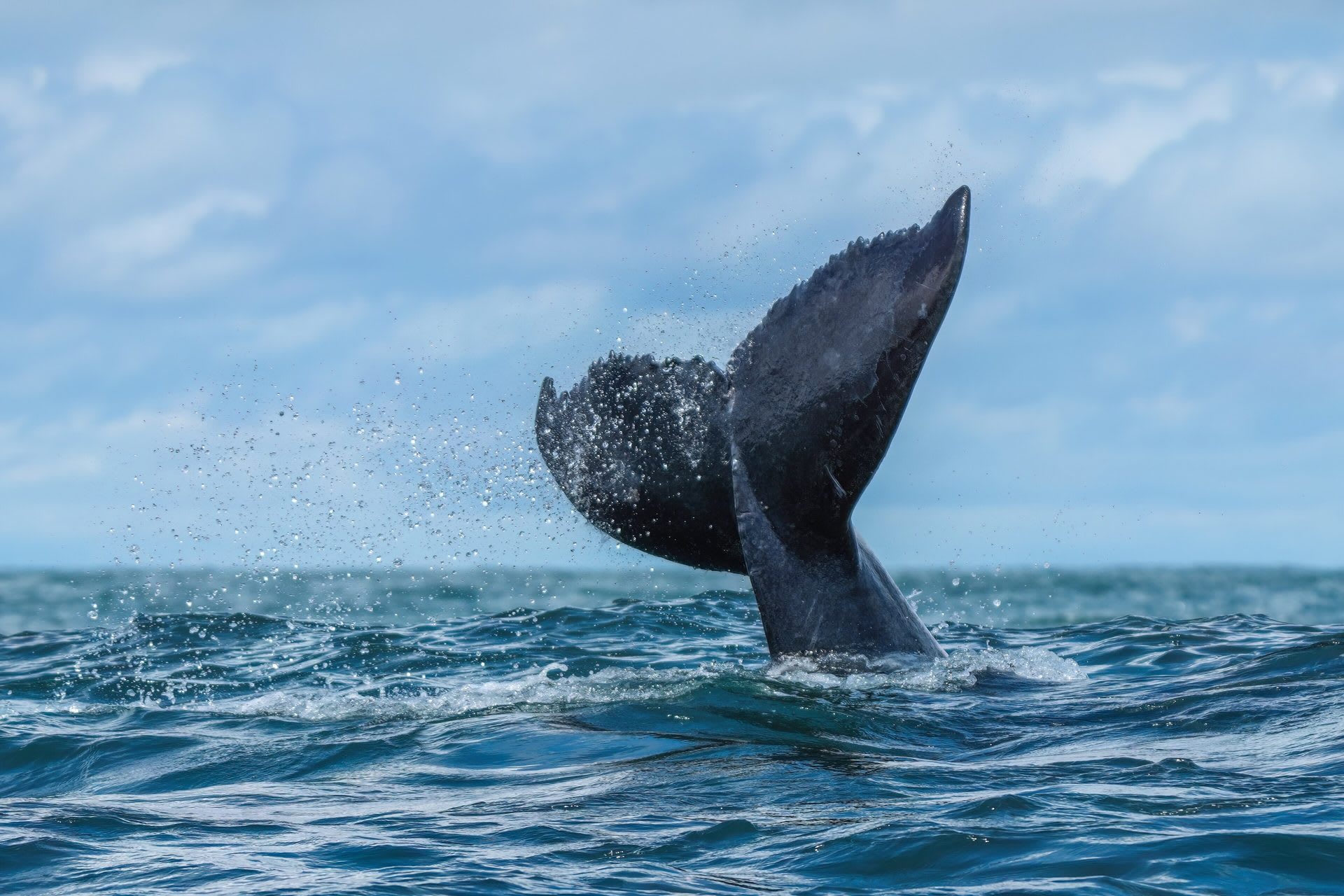
As of today, out of season, returns ~July. Earth Exhibit tracks the live conditions and flags it the moment it is on.
Each austral winter, humpback whales complete a migration of roughly 6,500 kilometers from their Antarctic feeding grounds into the warm waters of the South Pacific to breed, and Rarotonga in the Cook Islands sits squarely on the route.
What makes Rarotonga remarkable is geography: the island's fringing reef drops to deep water within meters of the coast, so the whales come in startlingly close to land.
From July to October — with September the peak — you can stand on the shore or a coastal lookout and watch mothers and calves, breaching adults, and the spray of blows just beyond the reef, sometimes only a stone's throw out.
On calm days you may even hear the boom of a breach or, with your head near the water, the long song of a male carrying through the sea.
Boat trips run too, but Rarotonga is one of the rare places where the whales put on the show from the beach.
The western and northern coasts, where the reef hugs the land closest, are the best vantage.
Where to see it
A taste of where to see it. The full map, exact coordinates and the best timing for each spot live in the app.
| Viewing spots |
|---|
| Rarotonga Western & Northern Coast (Black Rock / Avatiu-Avarua) |
This is the short version
This page shows a taste. The app has the full list of where to see this, the exact timing, and live conditions for 1,000+ natural phenomena worldwide, so you know the moment one is genuinely worth the trip.