As of today, out of season, returns ~July. Earth Exhibit tracks the live conditions and flags it the moment it is on.
Most humpback whales breed in open coastal water, but a distinct South Pacific sub-stock does something unusual in New Caledonia: it brings its newborns inside the protection of one of the world's largest barrier-reef lagoons.
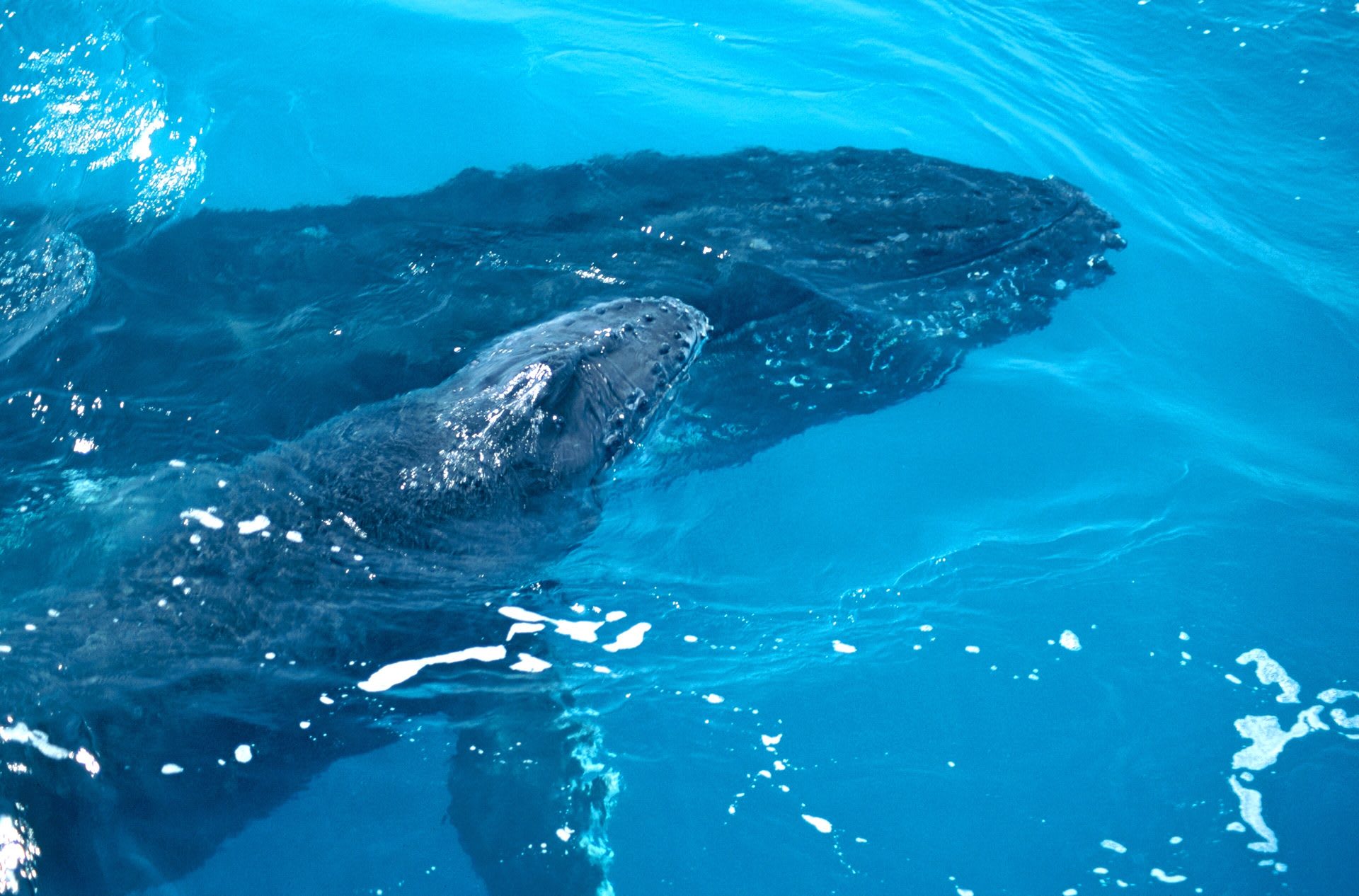
From mid-July to mid-September, having traveled more than 8,000 kilometers from their Antarctic feeding grounds, mothers and calves rest and nurse in the sheltered turquoise bays of the Great South, around Prony Bay at the southern tip of Grande Terre.
Because the reef keeps the swell out, the water is glassy and shallow and astonishingly clear, so a humpback the size of a bus appears suspended over pale sand flats, a calf tucked beneath her, escort males cruising past, and the occasional breach throwing spray across a lagoon ringed by red ochre hills.
The reef and lagoon are a UNESCO World Heritage site, and whale watching here is run as gentle, regulated day cruises from Nouméa and Prony onto calm protected water rather than a rough open-sea chase.
Where to see it
A taste of where to see it. The full map, exact coordinates and the best timing for each spot live in the app.
| Viewing spots |
|---|
| Great South / Prony Bay Lagoon |
This is the short version
This page shows a taste. The app has the full list of where to see this, the exact timing, and live conditions for 1,000+ natural phenomena worldwide, so you know the moment one is genuinely worth the trip.