As of today, in season, building toward peak (~November 1). Earth Exhibit tracks the live conditions and flags it the moment it is on.
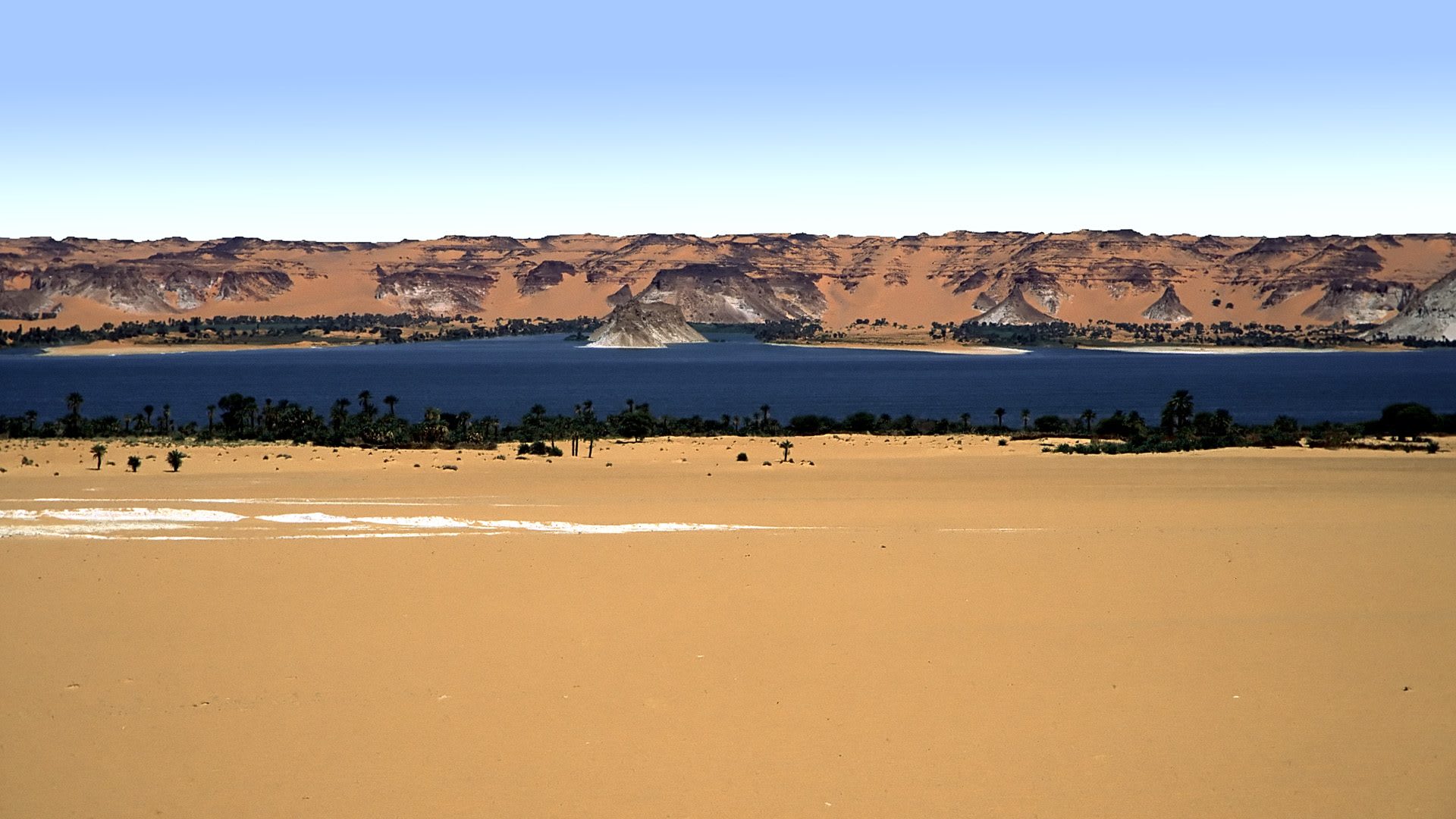
In one of the driest places on Earth — less than 2mm of rain a year — a cluster of eighteen permanent lakes shimmers blue and emerald among the dunes of northeastern Chad.
They survive on fossil water laid down more than 10,000 years ago, when the Sahara was green, fed continuously from a vast buried aquifer.
In the eastern group at Ounianga Serir, dense floating mats of reeds blanket the surface of the saline lakes, dramatically cutting evaporation and keeping the water from vanishing in the relentless heat.
The result is a hydrological system UNESCO calls 'worldwide unique': lakes of wildly different colors, depths and salinities sitting side by side, some fresh enough to drink, others saltier than the sea.
Lake Yoa, the deepest in the entire Sahara, holds a sediment record that reads like a 10,500-year diary of the desert's drying.
Date palms ring the shores and the wind sculpts the dunes around them, making this one of the most improbable oases on the planet.
Where to see it
A taste of where to see it. The full map, exact coordinates and the best timing for each spot live in the app.
| Viewing spots |
|---|
| Ounianga Serir (Lake Teli and the floating reed lakes) |
| Ounianga Kebir (Lake Yoa) |
This is the short version
This page shows a taste. The app has the full list of where to see this, the exact timing, and live conditions for 1,000+ natural phenomena worldwide, so you know the moment one is genuinely worth the trip.