As of today, out of season, returns ~November. Earth Exhibit tracks the live conditions and flags it the moment it is on.
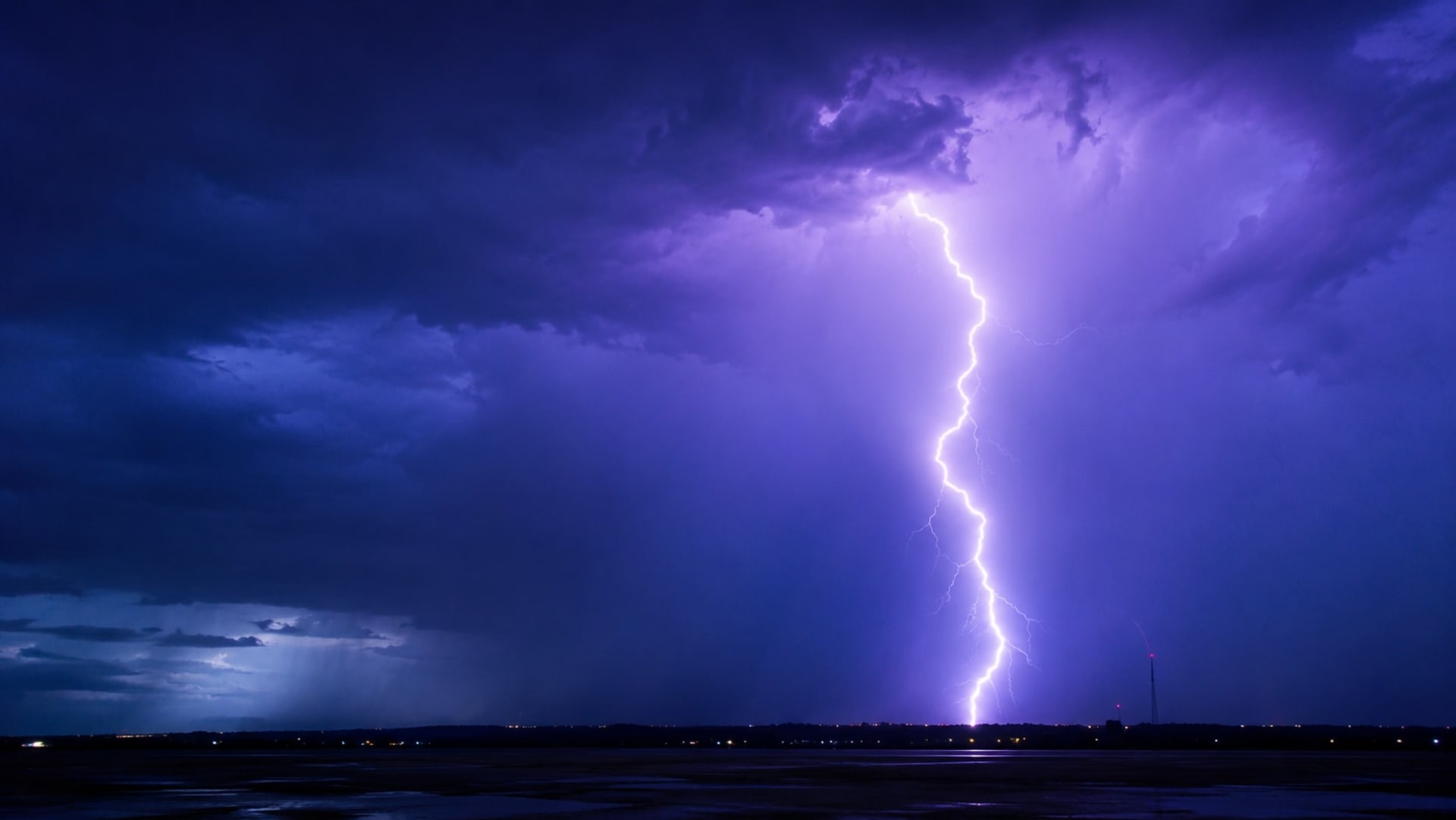
The sky flashes white above black water. Thunder cracks across Wajima's terraced rice fields while snow falls sideways in the wind. This is winter lightning, rare outside Japan's Hokuriku coast, where the coastal areas of the Sea of Japan are a well-known hotspot of winter lightning activity . From December through February, cold Siberian air crosses the relatively warm sea and ignites convective storms that fire lightning into coastal villages. Most places on Earth see lightning in summer. Here it belongs to winter.
The Science Behind Hokuriku Winter Lightning
Cold and dry air masses from Siberia are provided water vapor when crossing the Tsushima warm current, and then convective clouds with lightning discharges are produced and approach the coastal area of the Sea of Japan . The temperature contrast drives the engine. When continental air at minus 20 degrees Celsius flows over sea surface temperatures near 10 degrees, the lower atmosphere destabilizes fast. Moisture-laden air rises in narrow bands, building cumulonimbus towers that generate charge separation and electrical discharge.
Type B, which occurs most frequently in the coastal areas of the Hokuriku district, is mainly caused by topographically induced wind convergence and convective instability, both of which are associated with cyclones having multiple centers . The Japanese Alps force northwesterly winds to converge along the coast, concentrating storm activity within a few dozen kilometers of shore. Intensive midwinter lighting activity (Dec.?Feb.) in the Hokuriku district tends to be concentrated within an area tens of kilometers from the coastline .
Winter lightning carries more punch than summer storms. Winter lightning contains more electrically intensive discharges than summer lightning, and it often causes serious damage to electrical equipment (transmission lines, wind turbines, etc.) . The charge centers sit lower in winter clouds, sometimes below 2,000 meters, making strikes more direct and destructive.
When and Where to See Hokuriku Winter Lightning
Peak season runs December through February, with types B and C tend to appear from November to January . As of early 2026, winter 2026 got off to a disruptive start, and a series of intense storms in January and February repeatedly paralyzed transportation systems across the Hokuriku region, bringing heavy snow and active lightning.
Shiroyone Senmaida, Wajima: The thousand terraced rice paddies face northwest toward the Sea of Japan. During active winter pressure patterns, lightning flashes illuminate the entire coastline. The viewpoint sits at 37.4255 degrees north, 136.9995 degrees east, accessible year-round but expect snow-covered roads and limited parking in winter.
Mitsukejima (Battleship Island), Suzu: This offshore rock formation on the Noto Peninsula's northern tip draws lightning strikes during northwesterly flow. The coastal viewpoint at 37.3963 degrees north, 137.2471 degrees east offers unobstructed sea views. Gale-force winds are common during active storm periods.
Sado Island West Coast, Aikawa: The island's exposure to Sea of Japan weather systems makes it a front-row seat for winter storms. The west coast viewpoint near Aikawa (38.0417 degrees north, 138.2560 degrees east) catches storms as they track southeastward along the coast. Ferry service from Niigata may be suspended during high winds and heavy seas.
Night viewing yields the most dramatic displays. Storm systems intensify after sunset when radiational cooling enhances instability. Cloud-to-ground strikes light up snowfall in electric blue, while sheet lightning inside clouds creates a diffuse glow across the horizon.
Your Witnessing Guide
Bring layered clothing rated for sub-freezing temperatures and wet snow. Wind chill along exposed coastlines can drop perceived temperatures 10 degrees below ambient. Waterproof outer layers are non-negotiable. Storms bring horizontal precipitation that defeats umbrellas.
For photography, set your camera to manual mode: ISO 800-1600, aperture f/5.6 to f/8, shutter speed 10-30 seconds. Mount the camera on a stable tripod and use a remote shutter release to avoid vibration. Lightning is unpredictable, so shoot continuous long exposures and review periodically. A telephoto lens (70-200mm or longer) lets you isolate individual strikes against the dark sea.
Safety cannot be overstated. Do not stand on exposed cliffs or promontories during active lightning. Stay back from edges, as gale-force winds can exceed 100 km/h during peak storms. Monitor the Japan Meteorological Agency's real-time warnings through their English website or weather apps. Storms repeatedly paralyzed transportation systems, closing airports, snarling roadways, and suspending trains, and following storms that dropped more than 2 meters (7 feet) of snow in Aomori, authorities deployed troops to help clear roofs . If conditions deteriorate, retreat to shelter immediately.
Access the Hokuriku region via Hokuriku Shinkansen from Tokyo to Kanazawa (2.5 hours) or Toyama. Komatsu Airport (KMQ) serves Ishikawa Prefecture, while Toyama Airport (TOY) and Niigata Airport (KIJ) provide additional entry points. Car rental is essential for moving between coastal viewpoints. Roads are maintained but expect snow chains to be required. Ferries to Sado Island depart from Niigata City but run reduced schedules in winter, with frequent cancellations during storms.
Carry a thermos with hot liquid, extra batteries for electronics (cold drains them fast), and a weather radio or smartphone with reliable data coverage. Cell service can be spotty on remote coastal roads and ferry connections unreliable during storms.
Why It Matters
The coastal areas of the Sea of Japan are among the most widely known winter lightning activity hotspots in the world . The phenomenon provides critical data for understanding convective processes in cold environments. Researchers have detected gamma-ray emissions during winter thunderstorms in Ishikawa Prefecture, making Hokuriku one of the few places on Earth where high-energy atmospheric physics can be studied at sea level.
For local communities, winter lightning is part of the seasonal rhythm. Farmers secure equipment, utilities reinforce power lines, and coastal residents know the sound of thunder mixed with wind means another night of watching the sky burn over the sea. The storms deliver most of the region's winter precipitation, which melts into spring water for rice cultivation.
While warming reduces overall snow accumulation, extreme snowfall over short periods is actually showing an increasing trend in inland Hokuriku and Hokkaido regions, and when cold air moves south and encounters the warm currents of the Sea of Japan, it produces more intense precipitation, and since temperatures in these regions remain below freezing, the precipitation falls almost entirely as snow . Climate patterns are shifting the intensity and frequency of winter storms, making each season harder to predict.
This is the short version
This page shows a taste. The app has the full list of where to see this, the exact timing, and live conditions for 1,000+ natural phenomena worldwide, so you know the moment one is genuinely worth the trip.