As of today, out of season, returns ~October. Earth Exhibit tracks the live conditions and flags it the moment it is on.
Twice a year, on a trigger set by the moon, the reefs of Fiji perform one of the ocean's most exact mass spawnings.
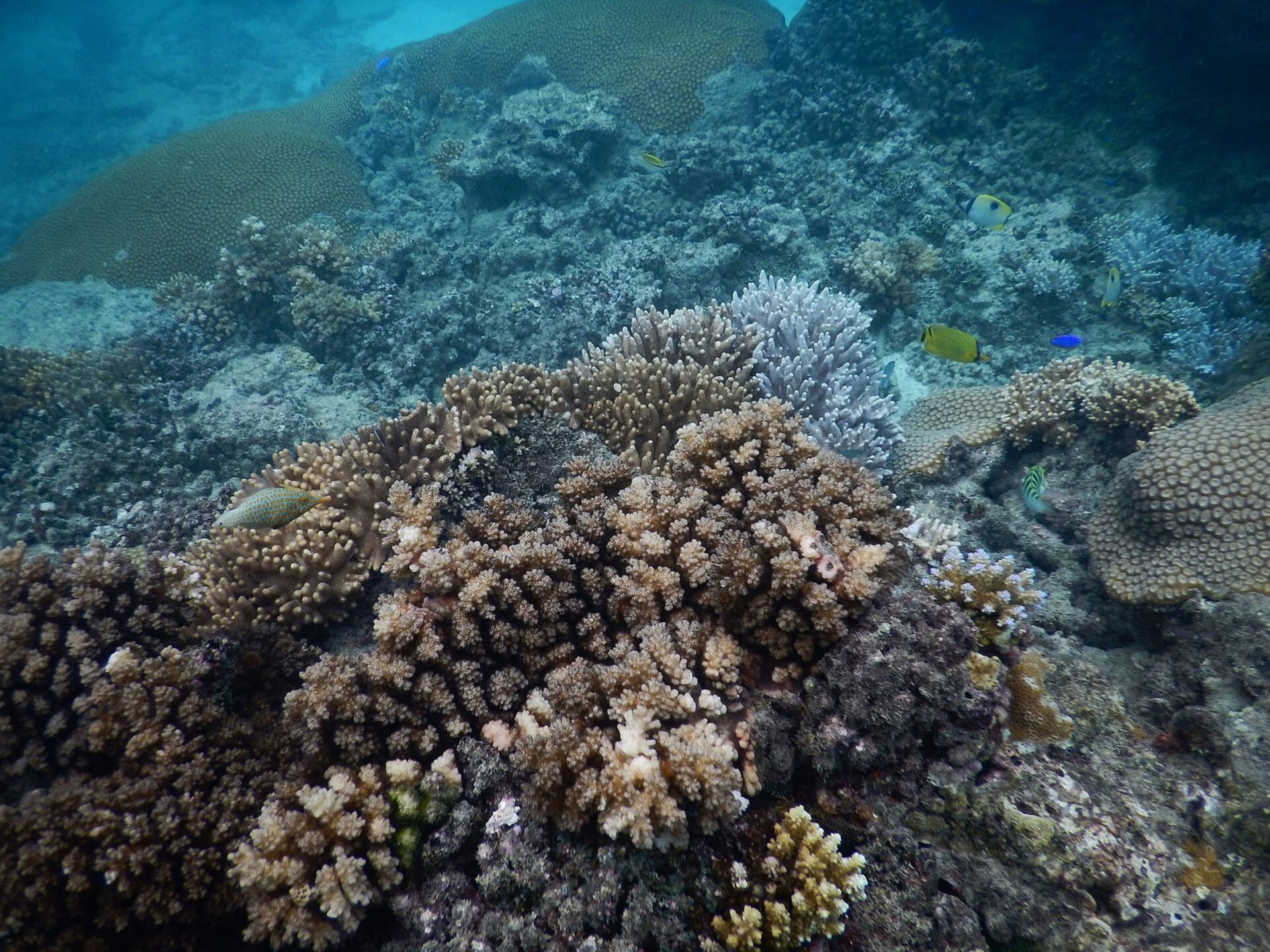
The balolo, a marine worm (Palola viridis, long known as Eunice viridis), spends its life hidden in crevices of the coral reef.
Then, on a single appointed night, it does something extraordinary: each worm detaches the rear, reproductive half of its own body, packed with eggs or sperm, and sends that writhing, faintly glowing tail wriggling to the surface — while the head stays safely below to regenerate.
Millions rise together in the hours before dawn, turning patches of sea into a soup of squirming green and reddish-brown strands.
The timing is famously reliable: the rising comes one night each in October and November, on the eighth night after the full moon, just before first light.
It is a beloved village event — families paddle out by canoe with nets and buckets to harvest the protein-rich tails, prized as a delicacy and folded into Fiji's calendar and culture as the 'Fijian whitebait' season.
Where to see it
A taste of where to see it. The full map, exact coordinates and the best timing for each spot live in the app.
| Viewing spots |
|---|
| Reef Shallows off Savusavu, Vanua Levu |
This is the short version
This page shows a taste. The app has the full list of where to see this, the exact timing, and live conditions for 1,000+ natural phenomena worldwide, so you know the moment one is genuinely worth the trip.