As of today, in season, building toward peak (~August 10). Earth Exhibit tracks the live conditions and flags it the moment it is on.
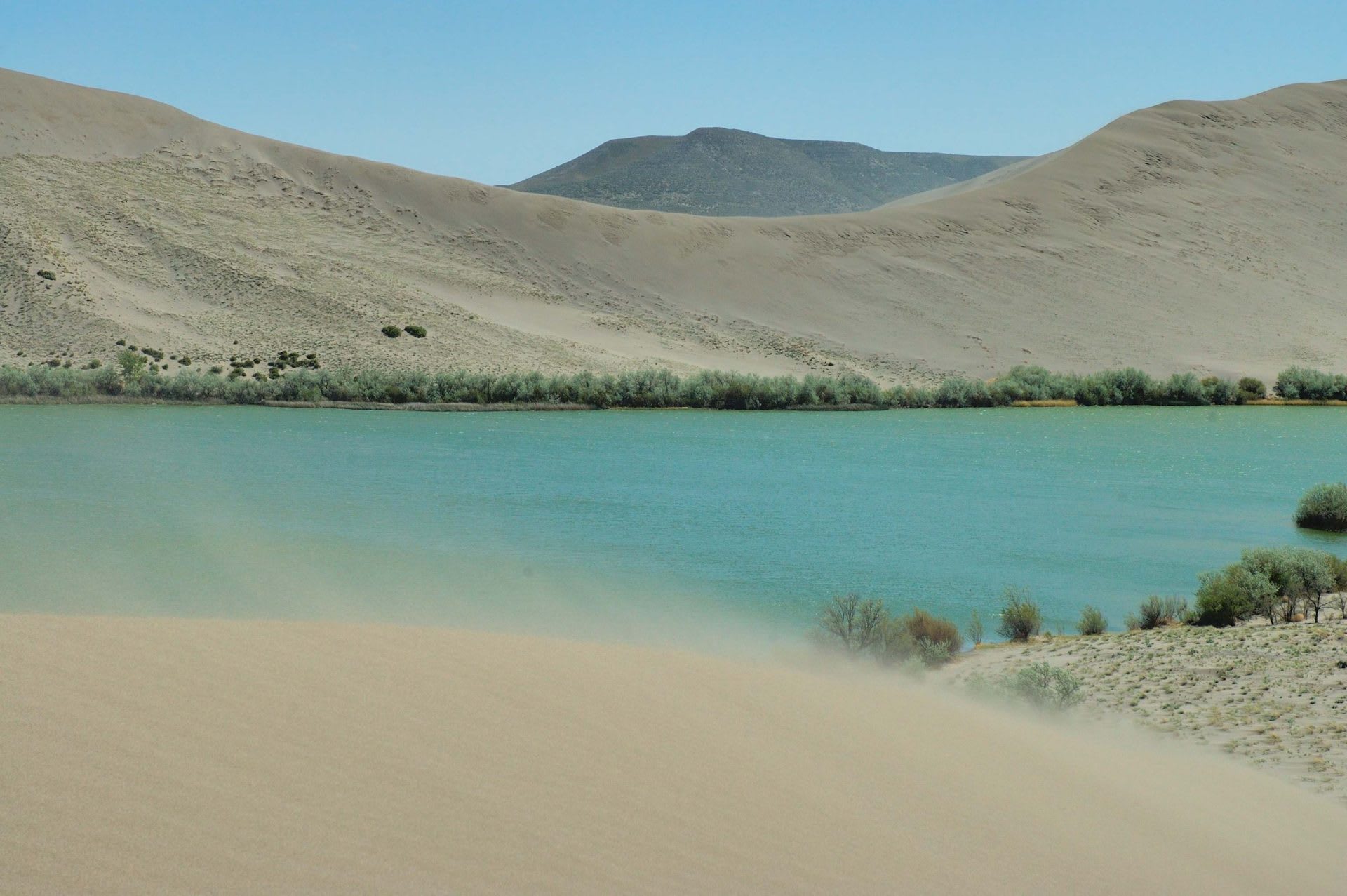
Out on the high desert of southern Idaho stands a sand mountain unlike any other on the continent: the great dune at Bruneau Dunes State Park climbs roughly 470 feet from the desert floor, the tallest single-structured sand dune in North America.
It is a relic of deep time, built from sand left behind some 14,500 years ago when the Bonneville Flood, one of the largest floods in Earth's history, tore down the path of the Snake River as Ice Age Lake Bonneville burst its banks.
Wind has since piled that sand into a near-symmetrical peak that holds its shape for centuries.
The park is also an International Dark Sky Park, ringed by desert and shielded from city light, and it houses a public observatory with one of the largest telescopes in the Northwest, a 25-inch reflector, plus a newer remote-imaging scope.
On weekend nights from spring through fall, rangers and the Boise Astronomical Society open the observatory to the public, pairing naked-eye constellations and the summer Milky Way with telescope views of planets, nebulae, and galaxies.
Time a visit to mid-August and you can climb the dune at dusk and watch the Perseid meteor shower streak over the desert from one of the darkest accessible spots in the region.
Standing atop a flood-born sand peak beneath an undimmed sky, with the Milky Way arching overhead, is geology and astronomy meeting in a single unforgettable night.
Where to see it
A taste of where to see it. The full map, exact coordinates and the best timing for each spot live in the app.
| Viewing spots |
|---|
| Bruneau Dunes State Park & Observatory |
This is the short version
This page shows a taste. The app has the full list of where to see this, the exact timing, and live conditions for 1,000+ natural phenomena worldwide, so you know the moment one is genuinely worth the trip.