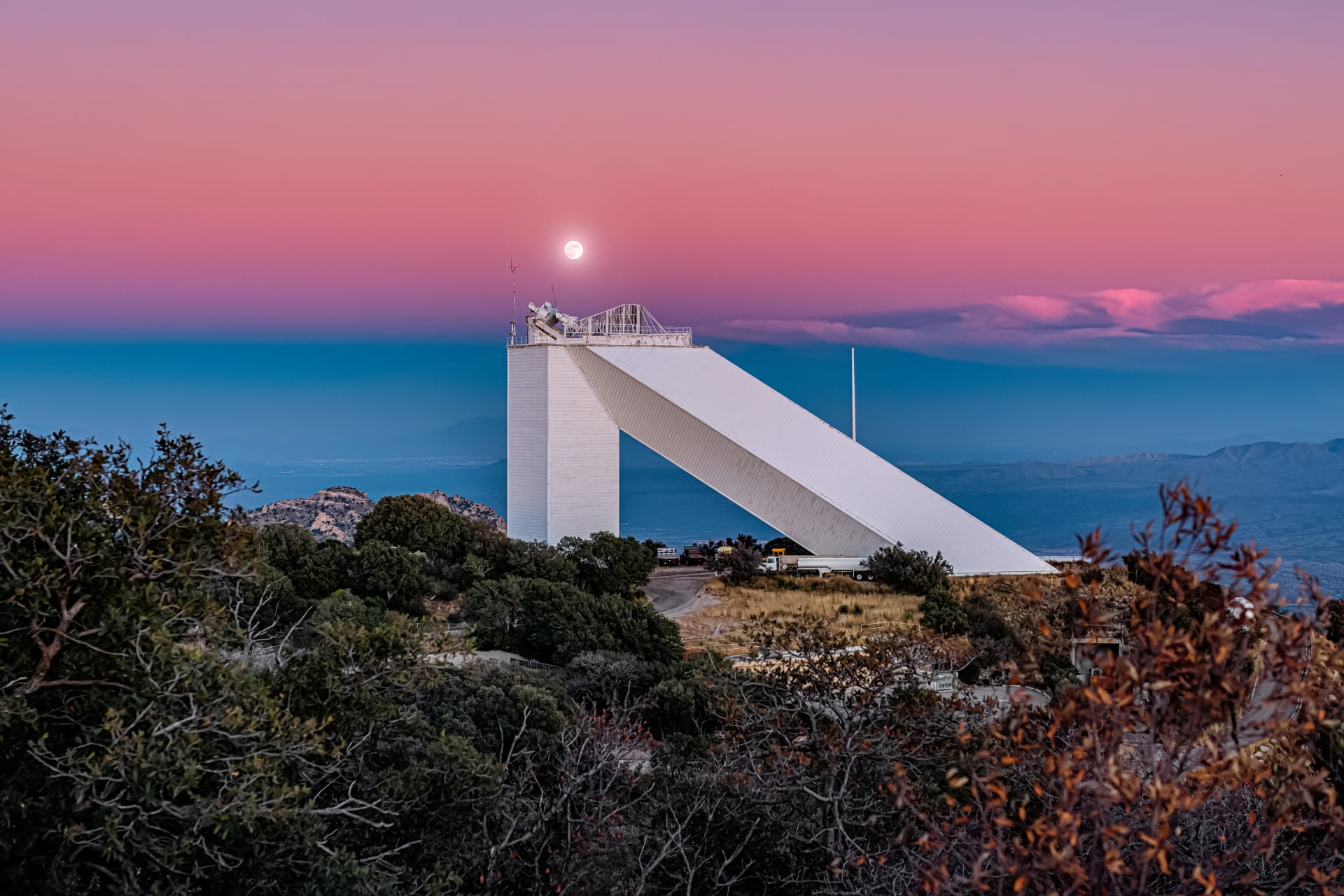
As of today, in season now. Earth Exhibit tracks the live conditions and flags it the moment it is on.
Just after the sun sets — or just before it rises — turn your back on it and look at the opposite horizon.
A dark blue-grey band hugs the horizon: that is the shadow of the Earth, cast outward into its own atmosphere, the only time you can actually see the planet's shadow.
Arched above it sits a soft pink-to-rose glow, the Belt of Venus, where the upper air is still catching reddened sunlight and scattering it back to you.
The pink band typically sits roughly 10-20 degrees above the horizon, and over the minutes after sunset the dark shadow climbs visibly higher as the pink fades upward and the sky deepens to night (the sequence runs in reverse before dawn).
It is sharpest from high, dry places with a clean, unobstructed horizon, and most vivid when the air is clear with just a little haze.
Like most sky-optics it is common when conditions are right and utterly fleeting — and almost everyone misses it because they are still looking at the sunset behind them.
Where to see it
A taste of where to see it. The full map, exact coordinates and the best timing for each spot live in the app.
| Viewing spots |
|---|
| Cerro Paranal Visitor Viewpoint, Atacama Desert |
| Sunrise Point, Bryce Canyon National Park |
| + 2 more spots, with exact coordinates and timing, in the app → |
This is the short version
This page shows a taste. The app has the full list of where to see this, the exact timing, and live conditions for 1,000+ natural phenomena worldwide, so you know the moment one is genuinely worth the trip.