As of today, peak season now, through ~June 30. Earth Exhibit tracks the live conditions and flags it the moment it is on.
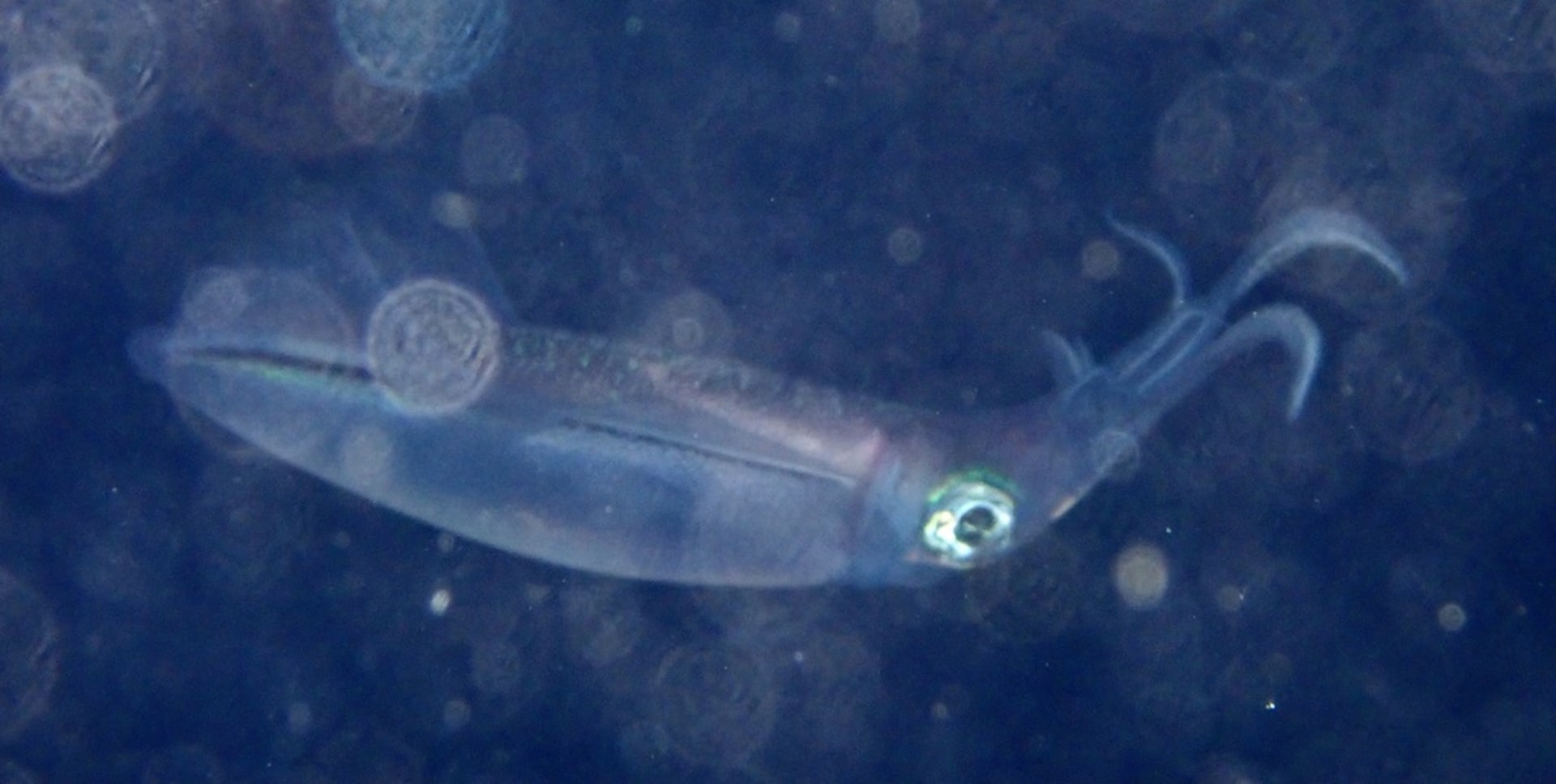
The water off Osezaki is dark. Then your dive light catches something translucent pulsing just beyond the kelp. A bigfin reef squid hovers a meter away, mantle flickering white to amber, fins rippling around its entire body like a ballet costume. Another appears, then three more. Aori-ika gather each spring and summer in Izu bays for courtship, mating, and egg-laying , and the shallow rocky reefs of the western Izu Peninsula transform into a squid nursery.
The Science Behind Aori-Ika Spawning
Sepioteuthis lessoniana, the bigfin reef squid, is also known as the tiger squid, glitter squid, or northern calamari . In Japan, it is called aori-ika, a name that references the balloon-like shape of the fins that extend nearly the full length of the mantle. The bright and slightly transparent meat is highly prized in Japan for sushi and sashimi, earning it the title "King of Cuttlefish" , though it is a squid, not a cuttlefish at all.
Adults average 3.8 to 33 centimeters in length , though larger individuals approaching 40 centimeters are caught. During the spawning season, males compete aggressively, flashing chromatic displays across their skin using specialized pigment cells. When a male wins access to a female, the pair descends together to select a site: a seagrass blade, a kelp stipe, or a flat rock in the shallows.
The female deposits clusters of translucent, gelatinous egg capsules, each about the size of a grape and containing multiple embryos. The masses hang in bunches, swaying with the current. Over weeks, the embryos develop, visible as dark specks inside each capsule. Once the larvae hatch, they are miniature versions of the adults, already capable of chromatophore-driven color changes. The adults do not guard the eggs. After spawning, many die, having completed their lifecycle.
When and Where to See the Egg-Laying
The primary window for observing aori-ika spawning along the Izu Peninsula runs from March through May, with the highest activity in April. When the water warms to around 19 degrees Celsius, usually in late May to early June, squid move inshore into the shallows , though early spawning pulses start in March at some sites. A secondary autumn spawning period occurs, though it is less consistent and less studied.
Osezaki, on the western shore of the Izu Peninsula, is the most reliable site. The inner bay at Ose Beach offers easy shore access and relatively calm conditions, ideal for night snorkeling or shallow diving. Bigfin reef squid spawning events are observed seasonally at Futo on the east coast of Izu, especially between June and August . Numazu Port and the seagrass bays along Suruga Bay also host spawning aggregations. Shimoda Bay and smaller coves around southern Izu see activity, but access is more variable.
The best observations happen after sunset and into the night. Squid are wary of bright lights, so if you are snorkeling or diving, use a red-filtered flashlight or keep the beam low and indirect. On calm nights with good water clarity, you can sometimes spot the egg masses from shore in water less than three meters deep, swaying in the shallows like clusters of translucent balloons.
Your Witnessing Guide
Aori-ika spawning is a night activity. Water temperatures in March and April hover between 15 and 18 degrees Celsius, cold enough to require a 5mm wetsuit or drysuit for extended immersion. If you are snorkeling, a hooded vest helps. Bring sturdy water shoes with good grip; shore entries at Osezaki and other Izu sites involve walking over slippery rocks and pebbles.
For photography, a macro lens (60mm to 105mm) works well for egg mass detail and squid portraits. Settings depend on ambient light and your strobe power, but start around ISO 400, f/8 to f/11, and 1/125 shutter speed. Adjust based on subject distance. If you are shooting video, continuous LED lights are better than strobes, though keep the intensity low to avoid spooking the squid.
Safety is critical. Night water activities carry risks from cold, currents, and limited visibility. Use a reputable dive shop or guide service if you are not experienced in night diving. Do not touch the egg masses or the squid. Your presence alone is a disturbance; minimize it. A dive light with red mode or a clip-on red filter reduces the impact on the animals.
Gear checklist: wetsuit or drysuit depending on season, dive computer or depth gauge, underwater flashlight with red filter, camera with macro lens, first aid kit, water, snacks for the post-dive debrief. If you are shore diving, a mesh gear bag or trolley is useful. Several dive shops around Osezaki rent equipment and offer guided night dives.
Accessing the Izu Peninsula from Tokyo is straightforward. Fly into Haneda or Narita, then take the Tokaido Shinkansen from Tokyo Station to Mishima, a 35 to 50 minute ride. From Mishima, local trains or rental cars reach the peninsula's dive towns. Driving from Haneda to Osezaki takes about two hours. Buses run from Numazu Station to Osezaki, though service is infrequent. Most divers rent cars or arrange transport through their dive shop.
Why It Matters
Aori-ika are coastal predators, feeding on small fish, crustaceans, and other squid. Their spawning aggregations concentrate biomass in shallow bays, creating feeding opportunities for larger fish, octopuses, and diving seabirds. The egg masses themselves are vulnerable to predation, though the gelatinous coating offers some protection. High concentrations of spawning squid in accessible shallows make them vulnerable to overfishing, a concern in regions where aori-ika are heavily targeted for sushi markets.
The phenomenon also matters because it is ephemeral and localized. Unlike firefly squid in Toyama Bay, which create bioluminescent displays and attract large crowds, aori-ika spawning is quiet, scattered, and requires patience. You will not see hundreds of squid at once. You will see a few, moving slowly, interacting with the reef, attaching their eggs in places you might swim right past if you are not looking.
There is no formal monitoring of aori-ika populations in Izu, but anecdotal reports from dive guides suggest year-to-year variability in spawning intensity. Water temperature shifts, fishing pressure, and habitat degradation all play a role. The seagrass beds where squid attach their eggs are sensitive to coastal development and sedimentation. Protecting these shallow habitats is critical for maintaining spawning sites.
This is the short version
This page shows a taste. The app has the full list of where to see this, the exact timing, and live conditions for 1,000+ natural phenomena worldwide, so you know the moment one is genuinely worth the trip.